

Note: This article was last updated on December 18, 2025, to reflect the latest developments in the SAVE plan and IDR repayment options.
Legal analysts and consumer advocates widely expect the federal court to approve a proposed settlement that formally ends SAVE ahead of its previously legislated sunset under the One Big Beautiful Bill Act. This settlement will transition borrowers into other repayment plans while preserving a regulatory pathway that could allow certain time spent in SAVE administrative forbearance to count toward forgiveness, depending on future implementation and guidance.
For borrowers in SAVE forbearance, the question is no longer whether to stay in the plan, but how and when to switch to IBR or another IDR option to resume forgiveness progress and manage balances effectively. Here’s what you need to know to make informed decisions and avoid surprises.
The SAVE Forbearance Problem
The SAVE plan has been under an appeals court injunction since July 2024, placing over 7 million borrowers into administrative forbearance. During this period:
- Interest continued accruing despite 0% payments
- Months in forbearance did not count toward IDR or PSLF forgiveness
- Many borrowers faced uncertainty about how and when to resume regular payments
With the expected settlement, SAVE will formally end, and the Department of Education will begin transitioning borrowers into other repayment options. For most, this will mean moving into IBR, and later potentially RAP when it launches in 2026.
What Borrowers in SAVE Forbearance Need to Know
Some borrowers may still be holding out hope for the SAVE plan, but with the settlement expected to end the plan, staying in SAVE forbearance is no longer a long-term option. Here’s what you need to know:
1. The Original SAVE Benefits Are Suspended
The SAVE plan once offered ultra-low or even $0 monthly payments, an interest subsidy to prevent balances from growing, and accelerated forgiveness for some borrowers. However, these benefits are no longer in effect—and under the settlement, their suspension is permanent. The features that originally made SAVE attractive are gone.
2. You’re Not Earning Forgiveness Credit Right Now
If you’re in SAVE forbearance, those months don’t count toward IDR or PSLF forgiveness — even if you decide to make voluntary payments. The Department of Education has made it clear that borrowers must be on an eligible repayment plan, like IBR, to make progress toward forgiveness. Simply being in forbearance puts the forgiveness clock on pause.
That’s a problem for anyone aiming to hit the 120-payment mark for Public Service Loan Forgiveness or qualify for forgiveness under the 20/25-year IDR rules.
3. There’s No Clear Path for SAVE’s Return
Under the proposed settlement, the SAVE plan is effectively over. The agreement would formally end SAVE, halt new enrollments, and move existing borrowers toward other repayment options instead of keeping them stuck in administrative forbearance.
This isn’t a temporary pause or a “wait and see” moment anymore. Even before the settlement, Congress had already scheduled SAVE to sunset by July 2028 under the One Big Beautiful Bill Act. The settlement simply accelerates that timeline and closes the door on SAVE returning in any meaningful form.
For borrowers, this changes the decision-making framework entirely. Staying in the SAVE forbearance is no longer a strategy—it’s a holding pattern while servicers prepare to transition accounts. The practical next step is planning a move to an active repayment plan like IBR, or preparing for the upcoming RAP, so forgiveness progress and repayment momentum can resume.
A Critical Warning About New Loans and Consolidation
Any loan disbursement or consolidation on or after July 1, 2026 will make all of a borrower’s loans ineligible for IBR, ICR, or PAYE—even if they were previously enrolled in these plans. If you need to consolidate in order to access IBR, ICR, or PAYE, make sure your consolidation loan is disbursed by June 30, 2026.
Quick Overview: SAVE Plan Settlement (Dec 2025)
Here’s a visual snapshot of the settlement and what it means for borrowers: enrollment stops, forgiveness under SAVE ends, current forbearance does not count toward IDR/PSLF, and future options like RAP start in 2026.

Switching to IBR Now
One of the most stable options available is the Income-Based Repayment (IBR) plan. Here are some key considerations:
- Stability: IBR is statutory law and is expected to remain a reliable repayment option moving forward. This makes it a good choice for borrowers looking for long-term stability.
- Forgiveness Progress: By switching to IBR, borrowers can begin making qualifying payments toward loan forgiveness immediately.
- Tax-Free Forgiveness Window: Enrolling in IBR now may allow borrowers to receive forgiveness before taxes on forgiven balances return in 2026, potentially saving thousands of dollars in tax liabilities.
- Eligibility: Under the old rules, borrowers had to show a “partial financial hardship” to qualify for IBR. That requirement was removed by the One Big Beautiful Bill Act, effective July 4, 2025, meaning borrowers at any income level can now enroll. This change affects eligibility only—IBR payments are still capped at the amount due under the 10-year Standard Repayment Plan when you first entered IBR.
- IBR as a Post-SAVE Transition Strategy: As servicers prepare to move borrowers out of SAVE, enrolling in IBR is one way to take control of that transition instead of waiting for automatic reassignment. It puts you back into an active repayment status, restarts forgiveness credit, and creates a stable base from which you can later reassess options—including RAP once it becomes available.
Important Note for Parent PLUS Borrowers:
Borrowers with Parent PLUS consolidation loans cannot enroll directly in IBR. To access IBR, they must first enroll in the ICR plan and make at least one full monthly payment under ICR before requesting a switch to IBR. This additional step can add time, so Parent PLUS borrowers should plan accordingly.
What to Expect After Switching Out of SAVE
Moving out of SAVE and into an active repayment plan is less about picking a “perfect” option and more about resetting your loan status. Here’s what borrowers should realistically expect once they make the switch.
Monthly Payments Will Likely Change
For many borrowers, payments under IBR will be higher than what SAVE originally promised. SAVE’s ultra-low payment structure is no longer in effect, and IBR generally requires 10–15% of discretionary income. That said, IBR still includes a built-in payment cap—your payment can’t exceed what you would have paid under the 10-year standard plan when you first enrolled.
Income Recertification Matters
Switching plans usually triggers income recertification. If your income has increased since the last time you certified—especially if that was pre-pandemic—your payment may jump immediately. Using IRS Federal Tax Information can speed things up, but having documentation ready is key if manual review is required.
Forgiveness Credit Restarts
Once you switch from SAVE into an active repayment plan like IBR, forgiveness progress can move forward again—but what that means depends on where you are in the timeline. Borrowers who have already reached the 20- or 25-year forgiveness threshold must apply to switch into IBR, ICR, or PAYE before the end of December 2025 to properly process forgiveness and potentially avoid tax consequences. This deadline matters because the temporary tax-free treatment of federal student loan forgiveness, enacted under the American Rescue Plan Act, is scheduled to sunset at the end of 2025. Starting in 2026, IDR forgiveness is expected to once again be treated as taxable income under federal law.
For borrowers still working toward IDR or PSLF forgiveness, enrolling in IBR resumes the counting of qualifying payments going forward. Time spent in SAVE administrative forbearance does not count, but once you’re back in active repayment, each qualifying payment moves you closer to forgiveness again.
Expect Processing Delays
Servicers are still working through a significant backlog of repayment plan changes. Many borrowers have reported mistakes and delays from their servicers, which can complicate the restart process. It’s common for switches to take weeks—or longer—to finalize. Take screenshots of your application, save confirmation emails, and get a case number if you call your servicer. Those records matter if something goes sideways.
Other Repayment Options Still Exist
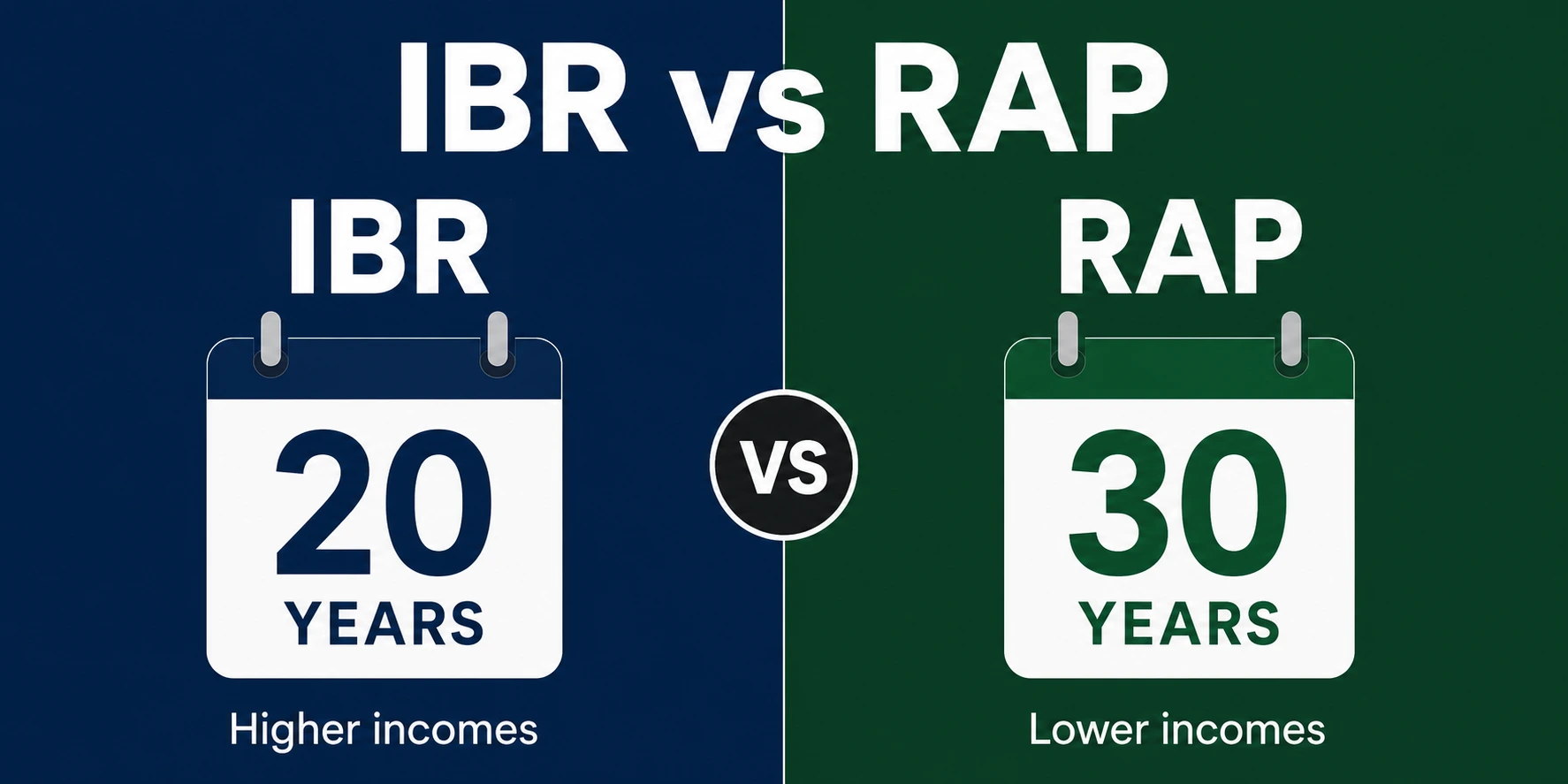
Some borrowers may still qualify for PAYE or ICR (though both are being phased out July 1, 2028) and are generally less attractive long-term. Looking ahead, the new RAP is expected to launch in 2026. RAP will include a principal-matching feature designed to help borrowers whose required payments are too low to reduce their balance—but enrollment will be optional, not automatic.
A Practical Transition Tip
If interest is accruing while your plan switch is being processed, voluntary payments can help prevent your balance from growing. Just keep in mind that these payments don’t count toward forgiveness unless you’re officially enrolled in an active repayment plan.
You’re Not Locked In
Switching to IBR now doesn’t lock you into it forever. Think of it as a stabilizing move. Once your account is active and forgiveness credit is flowing again, you can reassess your options as new plans roll out or your financial situation changes.
- Higher Costs: For many borrowers, IBR can be more expensive than SAVE, particularly for those who don’t qualify for the more favorable terms of IBR for New Borrowers (2014 version). The older version of IBR requires borrowers to pay 15% of their discretionary income, compared to SAVE’s 10%. This difference alone can lead to significantly larger monthly payments.
- Discretionary Income Definition Change: IBR defines discretionary income as the amount above 150% of the federal poverty level, whereas SAVE uses a more generous 225% of the federal poverty level.
- Income Recertification: Many borrowers have not recertified their income since before the pandemic. A new recertification could result in a significant payment increase if income has risen during that time.
How to Switch from SAVE to IBR or Another Plan
If you’ve decided to leave SAVE, the process itself is straightforward—but timing and follow-through matter.
Step 1: Apply through StudentAid.gov
Log in to StudentAid.gov and go to the “Income-Driven Repayment” section. Select IBR or another eligible plan based on your situation.
Step 2: Use IRS Federal Tax Information (FTI)
Apply using your Federal Tax Information (FTI) for faster processing. This is the method recommended by the Department of Education. If you apply without using FTI, processing may be delayed or not happen at all.
Step 3: Submit Documentation Promptly
Upload income documentation if required, and confirm with your servicer that the switch is underway.
Step 4: Track and Confirm
Track your application status on StudentAid.gov or call your servicer.
Important Notes to Know Before You Apply
- Expect delays. Servicers are still working through a large volume of repayment plan changes. Weeks—or longer—is not unusual.
- Document everything. Take screenshots of your submission, save confirmation emails, and request a case number if you call your servicer.
- You don’t need to reapply if you already switched. If you submitted an application to leave SAVE before recent court developments, that request should still be processed.
SAVE vs IBR vs PAYE vs ICR: Quick Comparison
Here’s an at-a-glance breakdown of how the major IDR plans compare:
| Feature | SAVE | IBR (new/old) | PAYE | ICR | RAP (2026) |
| Income-based payment | 5 – 10% (interest now accruing, no subsidy) | 10 – 15% | ~10% | 20% (or standard) | TBD |
| Forgiveness term | 20 – 25 years (time does not currently count) | 20 – 25 years | 20 years | 25 years | TBD |
| Interest subsidy | Paused / ended | No | No | No | TBD |
| Principal matching | No | No | No | No | Yes |
| Eligibility caps | None | None (post OBBB Act) | Income cap | No cap | TBD |
| Service availability | Ending soon (settlement accelerates sunset) | Safe | Ending 2028 | Ending 2028 | Starts 2026 |
Details for RAP are still being finalized. “Principal matching” refers to a new feature where ED will match borrower contributions toward principal if required monthly payments are too low to cover it.
Final Thoughts: Two Things to Keep in Mind
First, if you’re transitioning out of SAVE administrative forbearance, focus on preparation rather than waiting. IDR plan processing times remain slow, so enrolling in IBR now not only helps you stay in control, it also resumes forgiveness progress and prevents balances from growing.
Second, act now if you’ve already reached forgiveness eligibility. For borrowers who have already hit the 20- or 25-year forgiveness threshold, December 31, 2025, is a hard deadline. You must apply to switch to IBR, ICR, or PAYE before then to preserve the temporary tax-free treatment of IDR loan forgiveness. Miss this deadline, and any forgiveness that hits in 2026 could be taxed as income, potentially triggering a huge unexpected tax bill. Don’t gamble with your hard-earned progress—act now.
Stay Up to Date: Student loan rules are constantly changing, and temporary programs create deadlines that can’t be missed. To help manage this issue, I’ve created a monthly newsletter to keep borrowers up to date on the latest changes and upcoming deadlines.
Click here to sign up. You’ll receive at most one email per month, and I’ll do my best to make sure you don’t overlook any critical developments.
FAQ
If you need PSLF credit, yes—IBR/PAYE/ICR will count monthly payments; SAVE forbearance won’t.
Log in at StudentAid.gov, choose a new IDR plan, submit income proof, confirm with your servicer. Document everything in case of technical delays.
Probably not. Interest officially resumed on SAVE forbearance loans as of August 1, 2025, but some servicers and even StudentAid.gov haven’t updated balances in real time. Your interest is still accruing in the background and will be retroactively applied based on that date. This lag can last days or even weeks, depending on your servicer’s system updates.
Nope. “Administrative forbearance” is simply the servicing system’s label for the SAVE forbearance period. If you’re on SAVE right now, you’re in administrative forbearance whether your servicer spells it out or not.
It depends on your servicer and the current backlog. The Department of Education has confirmed there’s a 1.5 million borrower backlog for repayment plan switches, so delays of several weeks (or even months) aren’t unusual. Some borrowers have reported quick turnarounds in just a few days, while others have waited 60–90 business days. You can check your application status online or call your servicer for updates.
About the Author

Pedro Gomez is the new Student Loan Sherpa and a Certified Financial Planner™ with over a decade of experience helping clients navigate complex financial decisions. He is the founder of Global Financial Plan, where he writes about international living, geoarbitrage, and strategies for retiring young, and also leads Brickell Financial Group, a registered investment advisory firm focused on accelerating financial freedom.
Pedro is the architect behind the “12 Levels of Financial Freedom” framework and blends student loan strategy with long-term planning, tax efficiency, and investing. His work is especially geared toward upwardly mobile professionals, entrepreneurs, and those looking to design a life beyond the default path.
Pedro is available for strategy sessions and press inquiries.


Hi!
I have requested a buyback and it has been over a year and I am deciding on whether or not to switch off save to another qualifying repayment plan.
I have 3 months of payments left but certified over 120.
Not sure how to proceed? In the long one is it better to get off save to save more money?
Since SAVE is still under court injunction, time spent there won’t count toward PSLF and you can’t get discharged while enrolled. The best move is to switch to IBR right away. Once you move to IBR, all your past credits — including those from the one-time IDR adjustment — transfer over. That switch will also trigger a payment count update, which often confirms eligibility for forgiveness if you’ve already hit 120 qualifying payments.
The buyback backlog doesn’t need to delay you. Once you’re in IBR and your counts update, any remaining qualifying months should push you over the line for PSLF forgiveness.
What happens to the accrued interest in the SAVE plan forbearance? Is it capitalized and added to the principal, or will my payoff amount stay the same?
Accrued interest in the SAVE Plan forbearance is not capitalized or added to your principal for the period before August 1, 2025. However, starting August 1, 2025, interest does accrue and will increase your total payoff amount unless you make interest-only payments or switch to another repayment plan.
For someone with $180K in direct consolidated loans with ~ 2.5% interest rate, does it make sense to stay in forbearance as long as humanely possible if there is no plan to actually ever pay it off?
Only for the most cash strapped, would it make sense in staying in forbearance might be the best option. The issue is your forgiveness clock stops. And your balance grows. Staying on forbearance is not going to solve anything except for short term liquidity issue. Childcare expenses are most likely not going to be lowered or be eliminated any time soon. Therefore, what I would recommend is doing a financial plan to prioritize your different financial obligations and explore ways to best achieve them.
Thank you, Michael! We have a six figure loan in SAVE but are also paying astronomical monthly daycare fees for our kid should paying nothing for as long as possible on the loans knowing we have a low interest rate of ~2% seems like the best bet even with interest accruing. hopefully that’s the right assumption.
Thanks for this post, really helps me feel better about doing nothing. Any idea how the payments will be calculated for PSLF buyback? i.e. will they use this years tax returns? (I have had a big jump in income but have not recertified since before the pandemic when i was a medical resident with very low income).
What repayment plan will they use to calculate the buyback payments? I was on PAYE before and got moved to SAVE, will they use one of those or will they use the standard repayment? According to the info on FSA it looks like they will use my last payments on PAYE?
“If you were on an IDR plan immediately before or after the months you’re buying back:
If the deferment or forbearance was less than a year in length, we’ll use the lower of the two monthly IDR payments for the months before or after the time in deferment or forbearance.”
Hi Ben, I think you’ve mostly answered your own question. You found exactly the relevant section from studentaid.
My understanding is that they will use the IDR payment for whatever plan you were on, meaning if your were on PAYE, they will use that or if it was IBR, they will use that.
Where it gets tricky is the fact that they cannot use SAVE payments because of the injuction. They may go back and use prior REPAYE or PAYE payments. Its conceviable they ask for a tax return from during that period, but I’d be surprised if they go that route just because requesting all of those tax returns would be very time consuming and really slow down the process.
That you Michael for your article. I know organizations like MOHELA aren’t even processing IDR/IBR applications at this time. For myself, even if I wanted to leave the SAVE plan, I can’t due to MOHELA’s hold but I personally don’t plan on switching to IBR until after my taxes. My hope is that we will have a better idea of what options will be available but I want to file married but separate anyways to reduce the payment burden. Thank you for the good information.
Thank you very much, Michael, for all the valuable information you send to us!
Today, I was getting information about, analyzing and debating PAYE vs. IBR, and I finally decided to re-certify into PAYE. I tried to stay almost until the last minute before making a move. Maybe, as you said, waiting could be good sometimes. I hope I did the right thing!
In my humble opinion, there is a lot of uncertainty, but we need to bear with the situation, stay informed, be patient and keep our spirits positive. I refuse to think that this situation will cause a massive damage, as in a doomsday scenario. I do believe that there has to be a fairly healthy solution for this complicated issue. And I am not making any political statement or so here!. Please, consider me a non-political person!. At least, I would try to be positive and keep my mental health on check.
Thank you!