
Medical school has never been cheap. But heading into 2026, paying for it is less about “how much can I borrow?” and more about “what happens after I borrow?”
Federal loan limits, repayment rule changes, and rising costs mean today’s med students need a plan before classes even start. This guide walks through how to pay for medical school in 2026 using federal loans, how repayment strategy fits into borrowing decisions, and when private loans may fill a gap without blowing up your future finances.
Whether you’re starting med school next year or already enrolled and doing some uncomfortable math, this is your roadmap.
The Federal Loan Landscape for Med Students in 2026
Federal loans remain the foundation of paying for medical school. Even with new limits taking effect in 2026, they provide the most flexible borrowing options and access to repayment protections that private loans cannot match. Understanding these loans—and the new caps that apply—is the first step in planning your funding strategy.
New Borrowing Limits
Starting in July 2026, the One Big Beautiful Bill Act (OBBBA) introduces strict federal borrowing limits for professional students, including medical students:
- Annual limit: $50,000 per year
- Lifetime (aggregate) limit: $200,000
Important: These professional limits are part of a universal federal loan cap of $257,500, which includes all prior undergraduate and graduate federal loans. Students who borrowed heavily in undergrad may reach this universal limit before fully using their professional loan allocation.
Previously, students could borrow up to the full cost of attendance by combining federal loan programs. The new caps aim to prevent excessive debt and encourage schools to justify tuition costs relative to student outcomes.
Who qualifies for the $50,000 annual limit?
The higher annual borrowing cap applies to professional degrees like MD and DO programs. Other medical-related programs—such as Physician Assistant (PA) or Nurse Practitioner (NP) degrees—fall under the standard graduate loan limits, currently capped at $20,500 per year.
Grad PLUS Loans Are Eliminated
One of the most impactful changes is the elimination of Grad PLUS loans for new borrowers starting July 1, 2026. Previously, Grad PLUS allowed students to cover costs above the standard federal limits, including living expenses. With this option gone, federal borrowing alone may not fully cover medical school costs.
Legacy Borrower Note: Students whose first federal loan disbursement for their medical program occurs before July 1, 2026, are grandfathered. They may continue to access Grad PLUS loans under the old limits until they finish their program or until June 30, 2029.
At-a-Glance: 2026 Federal Loan Rules for Medical Students
| Feature | 2026 Reality for New Borrowers |
| Annual Federal Cap | $50,000 |
| Universal Lifetime Cap | $257,500 (includes undergrad) |
| Grad PLUS | Eliminated (unless grandfathered) |
| Private Loans | Likely needed for costs exceeding $50k/year |
| Federal Repayment | Repayment Assistance Plan (RAP) only |
Understanding the Funding Gap
Even with federal loans as your foundation, medical school costs often exceed what you can borrow. Tuition is just the starting point—housing, board exams, rotations, and travel add up quickly.
For new borrowers in 2026, the funding gap is larger and more structural than in previous years:
- Federal loans are capped at $50,000 per year
- Total medical school costs often exceed $90,000 annually
- Grad PLUS is no longer available for new students
Because of these factors, many students will need to explore private loans or other funding sources to fully cover the cost of attendance. This also means a larger portion of total debt may not qualify for federal protections, such as income-driven repayment or Public Service Loan Forgiveness, highlighting the importance of careful planning.
Understanding the size of your funding gap early is essential for making informed borrowing decisions and maintaining flexibility during repayment.
Repayment Strategy: Planning Before You Borrow
Paying for medical school isn’t just about how much you borrow—it’s about how you’ll pay it back. Starting in 2026, the federal repayment landscape will be simplified, but it comes with key changes every med student should understand.
The Repayment Assistance Plan (RAP)
For new borrowers in 2026, traditional income-driven plans like PAYE and SAVE are being replaced with the Repayment Assistance Plan (RAP). Here’s what you need to know:
- Income-based payments: RAP calculates your monthly payment as a percentage of your total adjusted gross income (AGI), typically ranging from 1% to 10%. Unlike previous plans, it no longer uses a poverty-level deduction.
- Minimum payment: Even residents with very low income must make a minimum payment of $10 per month.
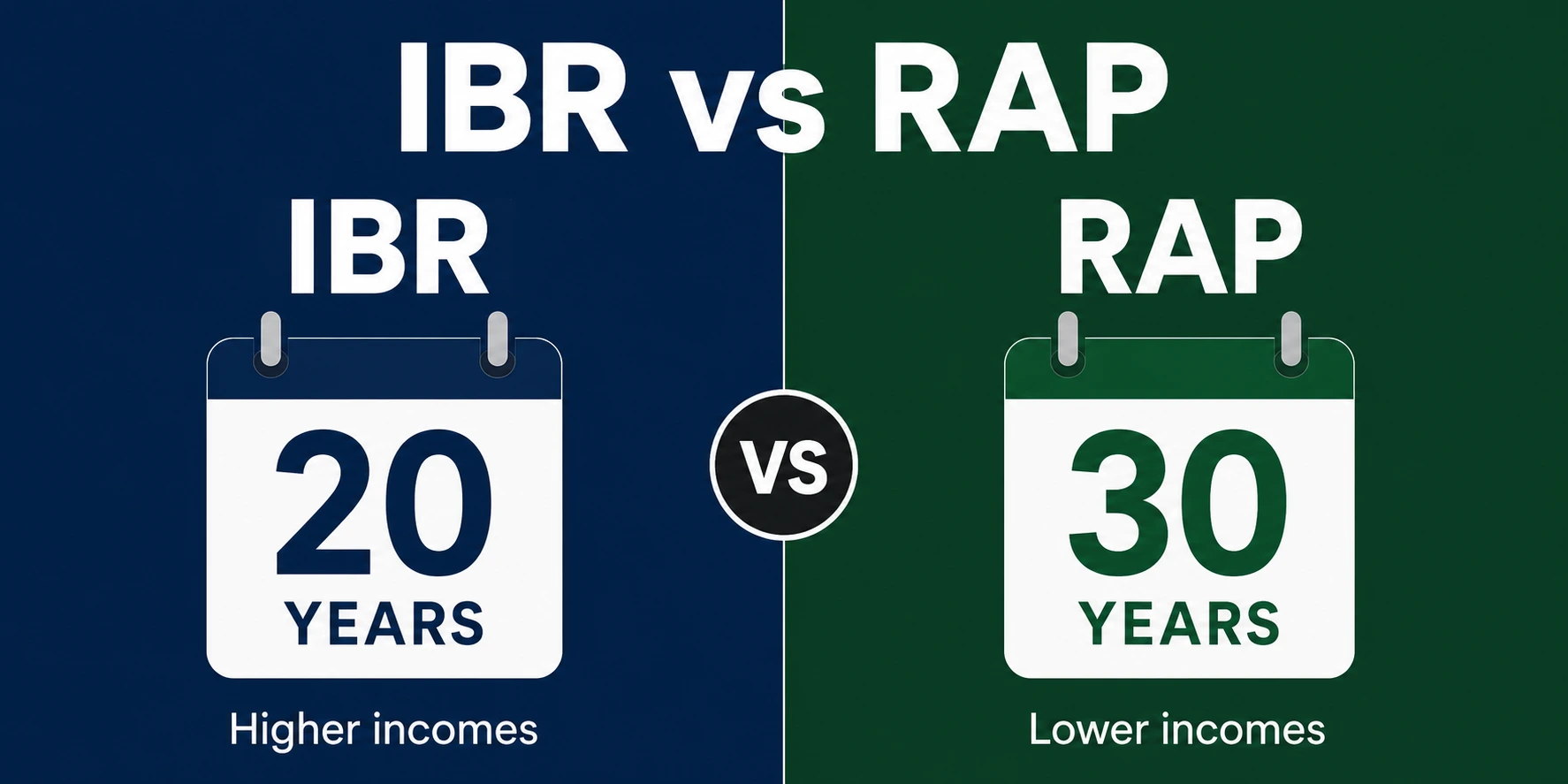
- Forgiveness timeline: Remaining federal debt is forgiven after 30 years of qualifying payments. Note that forgiven balances under RAP are likely taxable, except for amounts forgiven under Public Service Loan Forgiveness (PSLF).
- Interest treatment: RAP continues to waive unpaid interest during low-income periods, helping prevent your balance from growing while in residency.
- Federal protections: While RAP protects your federal loans, any private loans you take on to cover remaining costs will not have these protections. Be sure to review private loan considerations so you understand the risks and repayment obligations before borrowing.”
Why Early Planning Matters
- Estimate payments: Understanding your likely RAP payment helps you decide how much you can safely borrow each year.
- Plan for the funding gap: With federal loans capped at $50,000 per year, many students will need private loans or other sources to cover costs above that limit. Knowing RAP rules ensures you maximize federal protections first.
- Forgiveness impact: Planning your repayment path early helps you maintain eligibility for forgiveness programs and avoid surprises later, including potential tax liabilities.
Legacy Borrower Tip: If you borrowed federal loans before July 1, 2026, you can remain on your old IDR plan. However, taking any new federal loan after July 1, 2026, will require you to use RAP or a Standard plan for all your loans. Even a single new loan could move you off a 20-year forgiveness plan onto the new 30-year RAP timeline, so plan carefully before borrowing.
RAP Principal Subsidy (2026 Feature): If your monthly RAP payment doesn’t reduce your principal by at least $50, the Department of Education will contribute a subsidy to ensure your balance decreases by at least that amount. This helps prevent your debt from stagnating during residency.
When Private Loans Make Sense
Even with federal loans as your foundation, most medical students in 2026 will face a funding gap. With annual federal borrowing capped at $50,000 and total costs often exceeding $90,000 per year, private loans or other alternative funding sources may be necessary to cover remaining expenses.
Key Points to Consider
- Supplemental, not primary: Private loans should generally be used after federal options have been maximized. They do not offer federal protections like RAP or Public Service Loan Forgiveness.
- Irreversibility: Once a private loan is taken, it cannot be consolidated into the federal system. This means that portion of debt will never qualify for RAP, PSLF, or other federal protections. Learn more about the differences between federal and private student loans before borrowing to fully understand your options.”
- Neutral evaluation: Students should consider, evaluate, and compare private loan options based on interest rates, repayment terms, and flexibility. Avoid framing any loan as “best” or “recommended.”
- Cost vs. benefit: Using private loans can bridge the funding gap for tuition, living expenses, or exam fees—but increasing private debt means losing some federal protections, so careful planning is essential.
- Alternative tools: Income-sharing agreements (ISAs) can help cover gaps, but as of 2026, the CFPB classifies them as private student loans, meaning they carry similar repayment obligations and lack federal forgiveness options.
Step-by-Step Planning Approach
With federal limits, repayment rules, and private financing considerations in mind, it helps to approach medical school funding systematically. Think of it as a roadmap you can follow before and during school.
1. Calculate Your Total Cost of Attendance
- Include tuition, fees, housing, board exams, rotations, books, and travel.
- Don’t underestimate living expenses—these can be significant, especially in high-cost cities.
2. Determine Your Federal Borrowing Capacity
- Account for the $50,000 annual cap and $200,000 professional aggregate limit.
- Factor in any prior undergraduate or graduate loans, since the universal $257,500 cap may reduce your remaining federal eligibility.
- Identify your funding gap—the portion of costs not covered by federal loans.
3. Plan for Repayment Early
- Estimate your RAP payment based on your projected income during residency.
- Consider how private loans or ISAs will affect your monthly budget and repayment flexibility.
- Legacy borrowers should review whether taking any new federal loan in 2026 could move them off their existing forgiveness plan.
Learn more about how post-2026 borrowing can trigger portfolio-level changes in federal repayment and the so-called RAP Poison Pill here.
4. Explore Alternative Funding Sources
- Scholarships and grants: Merit-based or need-based awards can reduce reliance on loans.
- Service-based programs: Military scholarships, National Health Service Corps, or other programs may offset costs in exchange for service commitments.
- Income-Sharing Agreements (ISAs): Considered private student loans under 2026 CFPB rules, they can cover some costs but carry repayment obligations and lack federal protections.
5. Evaluate Private Loan Needs Carefully
- Only after maximizing federal options, determine how much private financing is required.
- Compare terms, repayment flexibility, and impact on long-term debt load.
- Remember, private loans cannot be consolidated into federal plans—this portion of debt will never qualify for RAP or PSLF.
6. Maintain Flexibility and Review Annually
- Costs, income, and personal circumstances may change during school.
- Reassess borrowing needs and repayment strategy each year to avoid surprises.
Quick Tip: Start early. Even a rough estimate of your funding gap can guide smarter borrowing and prevent unintended consequences with repayment protections.
Tip: While private loans can help bridge the gap, they are a tool, not a solution. Always maximize federal funding first, and treat private debt as a calculated, situational choice rather than a default option.
Federal vs. Private Loans (2026 Overview)
| Feature | Federal Loans (New 2026) | Private Loans (2026) |
| Annual Limit | $50,000 for MD/DO | Up to 100% of Cost of Attendance |
| Repayment | RAP (1%–10% of AGI) | Fixed or variable monthly payments |
| Forgiveness | 30 years (RAP) or 10 years (PSLF) | Generally no forgiveness |
| Credit Check | No (for Unsubsidized) | Required (cosigner often needed) |
| Consolidation | Can combine with other federal loans | Cannot consolidate into federal system |
Alternative Funding Options (Scholarships, Service-Based Programs, ISAs)
Not all funding needs to come from loans. Exploring alternative sources can reduce debt and improve repayment flexibility, especially with the 2026 federal loan caps in place.
1. Scholarships and Grants
- Merit-based scholarships: Awarded for academic achievement, leadership, or research accomplishments. Be aware that full-ride scholarships now disqualify students from receiving federal Pell Grants, so the net impact on federal aid may vary.
- Need-based grants: Some schools and private organizations offer grants tied to financial need. For 2026, any foreign earned income must be reported on the FAFSA, which can affect eligibility.
- Tips for success: Apply early and meet all deadlines. School-specific awards can still provide meaningful funding, but always check eligibility rules and how awards interact with federal aid.
2. Service-Based Programs
- Military or public service scholarships: Programs like the Health Professions Scholarship Program (HPSP) or National Health Service Corps (NHSC) can cover tuition in exchange for service commitments.
- Loan repayment benefits: Some service programs provide partial or full repayment assistance after graduation in exchange for working in underserved areas.
- Planning consideration: Service commitments are binding; make sure the terms align with your career goals.
3. Income-Sharing Agreements (ISAs)
- How they work: Instead of borrowing, students agree to pay a percentage of future income for a set period.
- Regulatory note: The CFPB now classifies ISAs as private student loans for regulatory purposes. That means they carry repayment obligations and do not offer federal protections like RAP or PSLF.
- Neutral framing: Consider ISAs as a situational tool to cover shortfalls—but fully understand terms, caps, and repayment obligations before committing.
Key Takeaways
- Alternative funding options can reduce the size of the private loan gap, lowering long-term debt risk.
- These options are complementary to federal loans, not replacements for careful planning.
- Always evaluate each option in context of your total borrowing plan, repayment expectations, and career path.
Final Thoughts & Next Steps
Paying for medical school in 2026 requires planning from the very first day you accept a loan. Federal limits, new repayment rules under RAP, and the larger funding gap mean that thoughtful preparation is more important than ever.
Key Takeaways
- Federal loans first: Maximize your $50,000 annual limit and $200,000 professional aggregate before considering alternatives.
- Understand RAP: Know how your repayment obligations, minimum payments, and the 30-year forgiveness timeline will affect your budget.
- Private loans are situational: Use them carefully to bridge gaps, knowing they cannot be consolidated into federal plans.
- Explore alternatives: Scholarships, service-based programs, and ISAs can reduce reliance on debt—but fully understand the rules and obligations.
Next Steps
- Estimate your total costs and funding gap for the upcoming academic year.
- Plan your federal borrowing within 2026 limits, accounting for prior loans and any legacy Grad PLUS eligibility.
- Evaluate alternative funding options to minimize private loans, including scholarships, service programs, and ISAs.
- Sign up for our newsletter to get updates on federal student loan changes, tips, and guidance for med students.
- Consult with a CFP if you want a personalized plan for managing med school debt, repayment strategy, and long-term financial planning.
Tip: Early planning today can save stress and debt tomorrow. Use this guide to map out your borrowing and repayment strategy before classes start.
About the Author

Pedro Gomez is the new Student Loan Sherpa and a Certified Financial Planner™ with over a decade of experience helping clients navigate complex financial decisions. He is the founder of Global Financial Plan, where he writes about international living, geoarbitrage, and strategies for retiring young, and also leads Brickell Financial Group, a registered investment advisory firm focused on accelerating financial freedom.
Pedro is the architect behind the “12 Levels of Financial Freedom” framework and blends student loan strategy with long-term planning, tax efficiency, and investing. His work is especially geared toward upwardly mobile professionals, entrepreneurs, and those looking to design a life beyond the default path.
Pedro is available for strategy sessions and press inquiries.