

Update – The Bill Is Now Law:
The One Big Beautiful Bill (OBBB) was officially signed into law on July 4, 2025, bringing major changes to repayment plans, forgiveness options, and loan eligibility. We’ve broken it all down in plain English in our latest guide:
What the One Big Beautiful Bill Means for Your Student Loans in 2025
In late June, GOP student loan reform efforts hit a major procedural hurdle in the Senate. The original proposal, which aimed to end several income-driven repayment plans and tighten forgiveness rules, was challenged by a Senate rules advisor. While some of the most sweeping changes were blocked, a revised bill passed a key vote on June 29 and is still very much alive.
Here’s what has happened, what changed, and what borrowers should be paying attention to now.
Senate Parliamentarian’s Ruling (June 26, 2025):
What is the Senate Parliamentarian?
The Senate Parliamentarian is a nonpartisan advisor who interprets procedural rules in the Senate. Their role is especially important when Congress tries to pass legislation using budget reconciliation.
Note: Budget reconciliation is a process that allows a bill to bypass the Senate filibuster and pass with just a simple majority (51 votes instead of 60), but the bill must primarily affect federal spending or revenue.
On June 26, the Parliamentarian ruled that several parts of the student loan reform bill violated what’s known as the Byrd Rule.
What is the Byrd Rule?
The Byrd Rule limits what can be included in a reconciliation bill. To qualify, a provision must:
- Primarily impact the federal budget (not just change policy)
- Not increase the federal deficit outside of the reconciliation time window
- Not be “incidental” to budget changes
What Did the Parliamentarian Block?
- Provisions that would have immediately forced current borrowers off their existing income-driven repayment (IDR) plans:
- Income-Contingent Repayment (ICR)
- Pay As You Earn (PAYE)
- Saving on a Valuable Education (SAVE)
The blocked sections would have required these borrowers to leave their plans and switch into a single modified Income-Based Repayment (IBR) plan or another alternative, leading to potentially higher monthly payments for many.
Important Note: While the Parliamentarian blocked this forced transition, the bill still includes a separate repeal of ICR’s statutory authority and mandates a phased transition for current ICR borrowers by July 1, 2028.
- Proposals to end Public Service Loan Forgiveness (PSLF) eligibility for medical and dental residents.
These borrowers typically work in nonprofit hospitals and qualify for forgiveness after 10 years of payments. The original bill would have excluded their residency years from PSLF credit, but this change was also blocked.
What Remained in the Bill?
The Parliamentarian allowed:
- Repealing IDR plans for new borrowers who take out loans after the bill takes effect
- Continuing to develop a new repayment plan for future borrowers (known as the Repayment Assistance Plan, or RAP)
Several other provisions, such as rules related to school misconduct and borrower forgiveness, were still under review at the time.
GOP Response: Revised Senate Bill (June 29, 2025)
After the Parliamentarian’s ruling, Senate Republicans updated the bill to make it compliant with reconciliation rules. On June 29, the updated GOP student loan reform bill passed a procedural vote (51–49), which allows it to move forward for full debate and possible passage.
Changes to Income-Driven Repayment (IDR) Plan Repeal
The bill phases out access to ICR, PAYE, and SAVE for new borrowers who take out loans after July 1, 2026.
For current borrowers with ICR loans (called “covered income contingent loans”):
- A mandatory transition will occur by July 1, 2028.
- These borrowers must choose either the new Repayment Assistance Plan (RAP) or the revised Income-Based Repayment (IBR) plan under Section 493C.
- If no choice is made, the Department of Education will automatically enroll them in one of these two plans.
For current borrowers on PAYE or SAVE:
- The bill does not set a specific termination date for these plans.
- However, it amends the legal authority under which these plans operate and blocks new enrollment after July 1, 2026.
- This means that while existing users may remain for now, the underlying legal framework has changed, and further regulatory action could affect their future availability or terms.
For Parent PLUS borrowers with double-consolidated loans:
- Borrowers already enrolled in PAYE or SAVE are specifically protected and allowed to remain on their current plan until at least June 30, 2028.
PSLF Residency Provision Removed
The proposal to end PSLF credit for medical and dental residents has been removed. That means:
- Residency years will still count toward PSLF, as they do now.
- The earlier plan to eliminate that credit was likely blocked due to lack of direct budget impact.
Parent PLUS Loan Repayment Changes
- ICR will still be phased out as the only available income-driven plan for Parent PLUS borrowers.
- But borrowers now have more time to act:
- Deadline to consolidate Parent PLUS loans into a Direct Consolidation Loan: July 1, 2026
- Deadline to enroll in ICR: June 30, 2028
- The bill also explicitly protects double-consolidated Parent PLUS loans that are already enrolled in plans like PAYE or SAVE.
Forgiveness for School Misconduct and Closures
- The revised bill immediately nullifies the Biden-era rules that expanded access to:
- Borrower Defense to Repayment (for school fraud or misconduct)
- Closed School Discharge (for schools that shut down mid-enrollment)
- For loans originated before July 1, 2035, the Department of Education will revert to the more restrictive rules that were in effect as of July 1, 2020.
- Borrowers seeking discharge will now face stricter eligibility criteria and less favorable terms compared to the 2022 regulations.
- The bill also limits the Department’s ability to issue any new rules that would increase program costs by more than $100 million, making it unlikely that more generous borrower protections will return soon.
What Happens Next for GOP Student Loan Reform
The bill is part of a much larger legislative package called the One Big Beautiful Bill Act, which includes major tax cuts and federal spending reforms.
Here’s what’s next in the process:
- Full Senate debate is currently underway. The final vote could take place as early as Monday.
- If the bill passes the Senate, it will return to the House of Representatives for a final vote.
- President Trump has publicly stated he wants to sign the bill into law by July 4.
- Further revisions could still be made, including to the student loan sections.
Where We Are Now in the Legislative Process
This table summarizes the steps involved in passing this reconciliation bill and where things currently stand:
| Step | Status | What It Means |
| Committee drafting | Done | Bill was created and finalized by Republican lawmakers |
| Parliamentarian review | Done | Senate rules advisor flagged provisions that didn’t meet reconciliation rules |
| Bill revisions | Done | Republicans updated the bill to comply with those rules |
| Senate procedural vote | Done (6/29) | Bill cleared the vote needed to move to full Senate debate |
| Full Senate debate | In progress | Senate is currently debating the bill; final vote may happen as soon as Monday |
| Final Senate vote | Pending | Needs 51 votes to pass; Republicans hold 53 seats |
| House of Representatives votes | Pending | Bill returns to the House for final approval |
| Presidential signature | Pending | Trump wants to sign the bill by July 4, 2025 |
Worried About How This Affects Your Loans — and Your Long-Term Finances?
A quick chat with a Certified Financial Planner can help you understand how these proposed changes might impact your student loan repayment strategy — and how it all ties into your bigger financial picture, from retirement planning to tax efficiency.
We’ll walk through your current plan, map out what the new rules could mean for you, and help you make confident, forward-thinking decisions tailored to your situation. Schedule a student loan consult
About the Author

Pedro Gomez is the new Student Loan Sherpa and a Certified Financial Planner™ with over a decade of experience helping clients navigate complex financial decisions. He is the founder of Global Financial Plan, where he writes about international living, geoarbitrage, and strategies for retiring young, and also leads Brickell Financial Group, a registered investment advisory firm focused on accelerating financial freedom.
Pedro is the architect behind the “12 Levels of Financial Freedom” framework and blends student loan strategy with long-term planning, tax efficiency, and investing. His work is especially geared toward upwardly mobile professionals, entrepreneurs, and those looking to design a life beyond the default path.
Pedro is available for strategy sessions and press inquiries.


Hi Pedro,
Thanks so much for all the work you do—your insights have been incredibly helpful for those of us navigating student loan debt.
I had a quick question I was hoping to get your thoughts on. I’m currently enrolled in the SAVE plan, and from what I understand, I can remain on it until it’s phased out in 2028—is that correct? I know it will continue to accrue interest, but it’s still my most affordable monthly option.
I realize this strategy carries some risk, but my hope is that by 2028, we’ll see a shift in Congress and the introduction (or reinstatement) of stronger income-driven repayment plans.
Does that line of thinking make sense, or is there something I might be overlooking?
Thanks again,
Sarah
Hi Sarah,
You’re right that you can remain on SAVE until it’s phased out in 2028 — but there are some important risks worth flagging.
As of August 1, 2025, interest is now accruing for borrowers on SAVE due to a federal court injunction. While you don’t have to make payments during this forbearance period, that time doesn’t count toward forgiveness under any IDR plan or PSLF. So while SAVE might be your most affordable option now, it also means pressing pause on forgiveness progress.
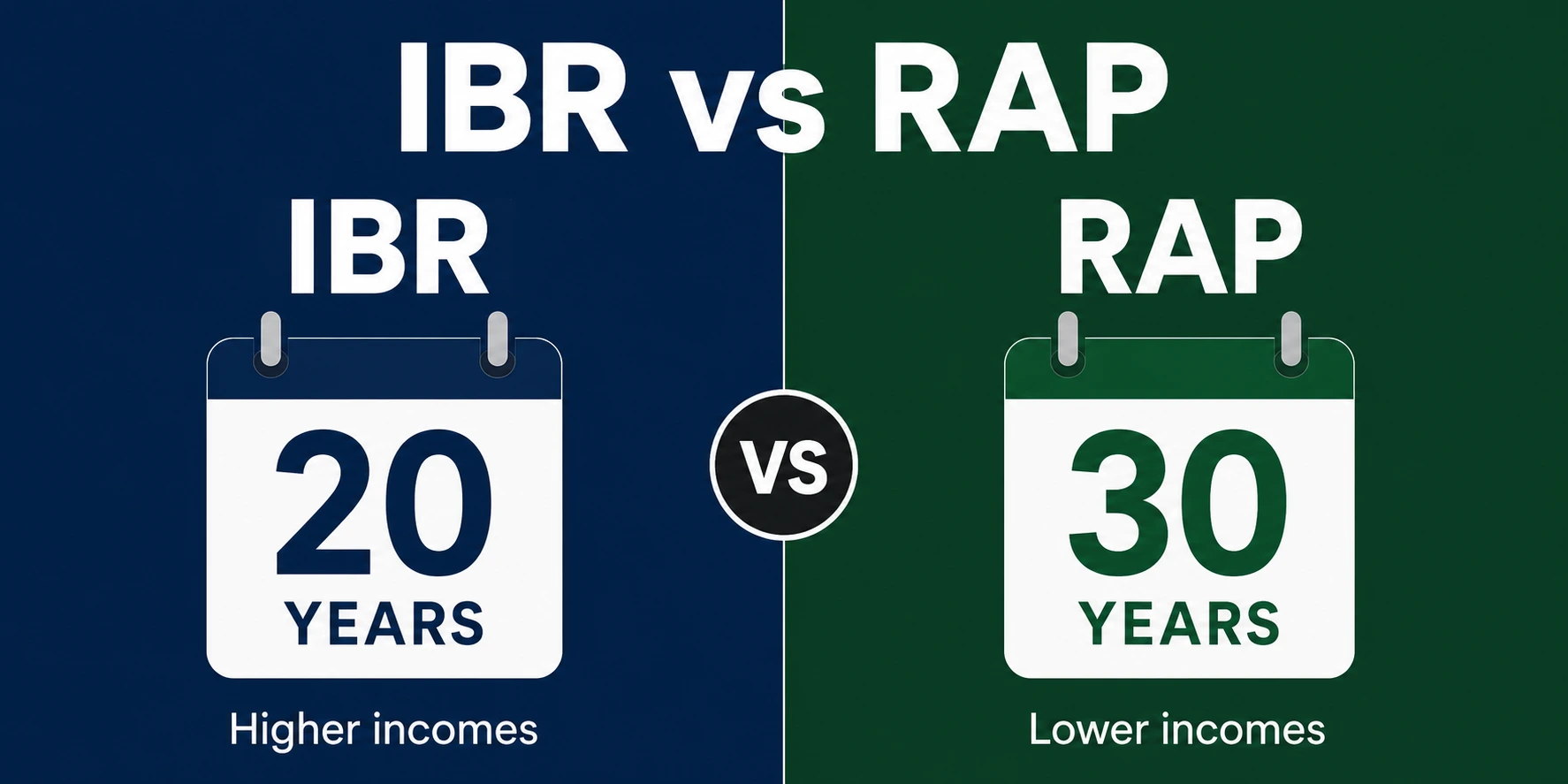
If no action is taken by July 1, 2028, borrowers still on SAVE will be automatically moved into the new Repayment Assistance Plan (RAP) — which requires 30 years of payments for forgiveness. That’s a longer timeline than IBR (20 or 25 years), which remains available and no longer requires a partial financial hardship to enroll.
It’s also worth noting that while prior qualifying payments under plans like IBR, ICR, or SAVE (if assigned by the Department) can count toward RAP’s 360-payment total, the time spent in SAVE’s current forbearance does not.
Thanks!
So I could wait and see what happens in the next midterms, and then switch to an IBR (20-25 years) if I believe it will remain conservative and I will be phased into RAP in 2028, correct?
Interest starts accumulating on loans in SAVE plan on 8/1. We have to pay the price for the litigation we aren’t participating in.
Hi Pedro,
In 2016, I consolidated Parent Plus loans and have no new loans since then. Thus, I have been on ICR since 2016.
Will I be able to choose between IBR (15%/25 yrs) and RAP? Or do I not qualify for RAP anyway.
The “excepted loan” definitions confuse me and thus my question.
Thanks!!! Scott
Hi Scott — great question, and you’re not alone in finding the “excepted loan” language confusing.
Since your loans are from a 2016 consolidation of Parent PLUS, they’re considered “excepted loans” under the new law. That means you won’t be eligible for the new Repayment Assistance Plan (RAP) when it launches in 2026 — RAP explicitly excludes consolidated Parent PLUS loans like yours.
However, you will be eligible for the Income-Based Repayment (IBR) plan — specifically the 15%/25-year version. The good news is that the new law eliminates the need to show partial financial hardship to enroll, and if you don’t actively choose a new plan when ICR is phased out, you’ll be automatically moved into IBR by July 1, 2028.
So in short: no RAP, but yes to IBR — and you won’t have to take any new loans to qualify.
While we can’t control Congress or the constant policy changes, one thing you can control is your Adjusted Gross Income. Strategic tax planning can significantly reduce both your student loan payments and your overall tax bill. I highly recommend reaching out to my team. Working with a CFP® who understands how to coordinate both — not just to lower your student loan monthly payments, but also your tax liability.
Thank you for this amazing write up! Is it true that current medical students that borrow via GradPlus can continue to borrow through GradPlus if they graduate 2028?
Believe it was Section 81008 paragraph 8 on the bill, the transition clause. Wondering if I understood it correctly
You understood it correctly — great eye on Section 81001!
Yes, current medical students who have already taken out Grad PLUS loans and are enrolled as of June 30, 2026, can continue to borrow through Grad PLUS for the remainder of their expected time to complete the program. That means if your program runs through 2028 and you’re still within the school’s published timeline, you’re covered under the legacy rules — even though new Grad PLUS lending ends for others starting July 1, 2026.
I also presume they will allow income verification the same way through tax return or proof of income and to update your family size despite how many dependents you claim on your taxes? For myself, I have had to update my loan servicer to cover all my kids as when my wife and I file married but separate due to my med school loans we split dependents on taxes but you can have them included in your payment calculation. I assume that can still be done with the amended IBR?
In regard to the bill as passed by the Senate and approved by the House, passed Congress last night and on its way to be signed by the President. As is, sec 82001 does not mention anything about “revised Income-Based Repayment (IBR) plan under Section 493C” . The original language that was sent to the Senate after the House passed its version was stripped by the Parliamentarian/Byrd Rule. Senators then inserted different language that doesn’t mention the original amended IBR terms of 240/300 payment cap for undergraduate/graduate loans respectively. So in your article, what is meant by “revised” IBR? And
In the article, “revised IBR” refers to the version of the Income-Based Repayment plan outlined under Section 493C of the Higher Education Act, as amended in the Senate bill. While Section 82001 may not explicitly label it “revised,” the bill does preserve IBR under 493C with updated provisions — including a payment formula of 15% of discretionary income (AGI over 150% of the poverty line).
-The term “revised” is used to distinguish this IBR option from:
-The older plans being phased out (like PAYE, SAVE, and ICR), and
The new Repayment Assistance Plan (RAP), which features a 30-year forgiveness timeline and no 10-year cap.
The article reflects the fact that existing borrowers will be offered a choice between this 493C IBR and RAP during the transition, and that the forgiveness timeline for IBR (20 or 25 years) will still apply.
So while you’re right that the original House language with the 240/300 payment caps was stripped, the Senate version still retains a functional IBR under 493C — just without some of the more borrower-friendly updates that were proposed earlier.
Does this mean that there will be 2 IBR plans, “old IBR” with 25 years forgiveness timeline and IBR (2014) for newer loans with a 20 year forgiveness timeline? I read that due to the Parliamentarian stripping out the language from the House bill, the Senate bill retained PAYE, SAVE, and ICR till 2028 Is that correct? And can consolidating old loans lead to being on the newer IBR (2014)? Thank you.
Hi Pedro,
Assuming the bill passes the House I did read that the partial financial hardship requirement will be removed for old/new IBR immediately. Is this correct? I believe they are removing the payment cap as well. A mix of good and bad there clearly. Thank you again for your insight!
You’re right that the partial financial hardship requirement for IBR is being removed, and that change would take effect immediately once the bill is enacted.
As for the payment cap, it’s a mixed bag. The modified IBR plan keeps the cap at the 10-year standard amount. But the new Repayment Assistance Plan (RAP) likely does not include that cap — and it introduces a $10 minimum monthly payment even for borrowers with no income. So yes, a mix of good and bad, just as you said.
After graduation from a Master’s program in 1999, I have been making payments on some type of extended repayment program for years until I consolidated to take advantage of the one time adjustment a couple of years ago. It seems like I should have had over 25 years of qualifying payments, but I never could get an accurate count because they failed to count over 9 years of payments. I’m currently in a PAYE limbo where I should have enough time to qualify for forgiveness if not for the confusion and incorrect payment counts. I should in fact be a year or so beyond what is necessary. I’m having a bit of a hard time understanding how this new legislation would affect someone in my position
Curtis, many long-term borrowers like yourself are finding that the one-time IDR adjustment finally gave credit for years of overlooked payments—especially from extended or non-IDR plans prior to consolidation. If you’ve truly been in repayment since 1999, that adjustment should’ve put you at or past the 25-year forgiveness mark, especially now that prior repayment, forbearance, and deferment periods can count.
Looking ahead, the new legislation could directly impact your next steps. If PAYE is eliminated, you’d be transitioned into either the revised IBR plan, which maintains the 20- or 25-year forgiveness timeline and honors past IDR payments like those made under SAVE or PAYE, or the new RAP plan. RAP comes with a 30-year forgiveness timeline, though prior eligible payments—including those made under IDR plans, Standard, and even some deferment or forbearance periods—can still count toward that total. So while it’s not a full reset, the timeline is significantly longer than IBR.
What makes this even more urgent is the tax angle. The federal tax exclusion for forgiven student debt expires after December 31, 2025. That means if your loans are forgiven this year, the balance is tax-free. But if forgiveness slips into 2026, the entire forgiven amount could be treated as taxable income. The difference could be tens of thousands of dollars in taxes.
That’s why continuing to make payments under PAYE isn’t always the safest move this close to the finish line. A proactive plan means verifying your official IDR count on StudentAid.gov, comparing it to your actual repayment history, escalating discrepancies if needed, and documenting everything in case manual forgiveness is required. With PAYE set to be eliminated, timing any transition to IBR before the 2026 deadline is critical to avoid defaulting into RAP. And if forgiveness slips into 2026, the tax hit could be significant—since the current federal tax exclusion ends December 31, 2025. That’s where I can help. In a Student Loan Strategy Session, we’ll review your IDR count, compare timelines under IBR and RAP, and map out your best path to forgiveness—plus you’ll get 1 month of email support to navigate any changes that follow.
Thank you much Pedro! You are absolutely the subject matter expert on this and financial planning. With all these changes, having services such as yours will become even more important!
Sam
I really appreciate your comments! Although I am biased, I couldn’t agree more.
The conclusion to all this policy changing madness, and terms changing directions quicker than a whirlpool is that TAX PLANNING has never been more important.
While it was nice to save money on taxes, it has now become essential in order to lower you student loan payments.
You can’t control what the government is going to do. But you can control wether or not you deploy proactive planning to prepare and adapt for whatever this administration decides to through your way.
Isn’t a court ruling still pending that is expected to impact SAVE and possibly PAYE and ICR?
Yes, there’s definitely still a court ruling pending that could impact SAVE—and potentially PAYE and ICR as well.
Here’s where things stand:
The February 2025 federal court injunction paused many parts of the SAVE Plan and certain forgiveness provisions for other IDR plans. Right now, borrowers on SAVE are stuck in a general forbearance (no payments due, no interest accrual—but also no progress toward PSLF or IDR forgiveness). PAYE and ICR forgiveness are also paused. Even though PAYE and ICR weren’t created by Congress, they’ve been protected so far because courts are reluctant to overturn regulations that have been in place for more than six years.
That said, this isn’t over. The underlying lawsuit is still moving through the courts. If the ruling expands, it could further affect IDR programs like PAYE and ICR, especially since parts of their forgiveness rules were modified by the Biden administration in 2023.
At the same time, there’s also a pending Republican bill in the Senate that—if passed—would eliminate SAVE, phase out PAYE and ICR for new borrowers, and push most people into either a new 30-year Repayment Assistance Plan (RAP) or a modified IBR plan by 2028.
So both the courts and Congress are in play right now.
If your repayment strategy depends on SAVE, PAYE, or ICR, this is a critical time to build a backup plan. That’s where I can help. I’d recommend scheduling a Student Loan Strategy Session, where we’ll:
Map out how these court cases and the Senate bill could affect your repayment and forgiveness path;
Compare your IDR options like SAVE, IBR, and PAYE based on your specific loan history;
Outline immediate steps and contingency plans in case the legal landscape shifts again;
And include one month of email support for follow-up questions as the situation evolves.
With so much in flux, it’s smart to plan based on where things are headed—not just where they stand today.
Sorry for the multiple postings. My phone was acting up. I’ll take this opportunity to ask if the Senate has put in any language for the 2028 IBR regarding tax filing status like they did for RAP? Thanks again , Pedro and feel free to delete my duplicate comment lol.
They did remove the marriage penalty for RAP in the modified senate bill.
Yes correct
Yes that was removed. No worries! Your questions and comments are greatly appreciated!
Hi Pedro,
Could you please provide more information on the IBR plan terms being offered in 2028 to current borrowers both pre and post 2014? Thank you!!
Sam
Could you give more details on the revised IBR plan they are going to move current borrowers to in 2028? Thanks!
Hi Pedro,
I was wondering if you could help clarify a couple things I read/heard about the bill. I have heard and this is why I am asking lol, that when the GOP put 2028 in the bill with regard to payment plans as you discussed, that they were opening up the RAP plan to current borrowers and IBR to those who may not qualify now and NOT removing any plans for current borrowers at that stated time. The new bill stated: “Streamline income-driven repayment for existing borrowers: Beginning July 1, 2028, existing borrowers (with loans taken before July 1, 2026) will have access to the Repayment Assistance Plan and the income-based repayment (IBR) plan created by Congress; under IBR, pre-2014 borrowers pay 15% of discretionary income (income above 150% of the Federal Poverty Line)
with forgiveness after 25 years; post-2014 borrowers pay 10% of discretionary income with forgiveness after 20 years”. I have read that that they cannot remove the current payment options in the future at all for current borrowers. This is all truly giving me a headache. I have referenced the Senate HELP summary which gave me this information. Please let me know your thoughts. Thanks Pedro!
Hi Sam,
You’re asking a great question, and I can see how the HELP summary created some confusion here. The bill does say that starting July 1, 2028, existing borrowers (those with loans before July 1, 2026) will have access to both the new Repayment Assistance Plan (RAP) and IBR. This is tied to the mandatory transition out of ICR by that same date.
That said, when we look directly at the legislative text for Section 493C (which governs IBR), it defines the new payment calculation as follows: “The term ‘applicable amount’ means 15 percent of the result obtained by calculating, on at least an annual basis, the amount by which—(A) the borrower’s, and the borrower’s spouse’s (if applicable), adjusted gross income; exceeds (B) 150 percent of the poverty line applicable to the borrower’s family size as determined under section 673(2) of the Community Services Block Grant Act (42 U.S.C. 9902(2)).
Importantly, the bill doesn’t differentiate between pre-2014 and post-2014 borrowers when it comes to the percentage rate or the forgiveness timeline in this section. That 10% vs. 15% and 20- vs. 25-year split you mentioned appears to come from the HELP summary or prior law—not from the specific legislative language that would control how IBR works going forward under this bill.
However, I am getting a different interpretation. The bill replaces “Special Terms” for new borrowers on and after July 1st, 2014, with AND BEFORE July 1, 2026. The way I interpret this, is that they are streamlining old and new IBR rules into one with before and after 2026 vs 2014. Basically, it is eliminating the more generous 10% of discretionary income and consolidating (“streamlining”) the payment to 15% of discretionary income to the entire IBR plans.
I will continue to research, and challenge these interpretations. As I hope you do with mine which I greatly appreciate! Collectively this helps us digest and interpret quick changing policies more accurately.
Hi Pedro,
Now that this is law, I just wanted to verify that the new modified IBR plan will allow for married filing separate still like “old IBR” which it basically is a mutated version of. Thanks!